Limestone Tile Cleaning and Polishing

Welcome to my Work History archive where you will find detailed examples of the cleaning and renovation of Limestone tiles carried out in South West London

Cleaning and Renovating Limestone tiles

Limestone is a sedimentary stone, as such it’s generally very porous and acid sensitive and can be damaged through the use of even mildly acidic soaps, shampoos and body washes. Because of this we do not recommend it for use in wet rooms, shower cubicles or near swimming pools.

Like any stone Limestone needs to be sealed to prevent dirt becoming ingrained in its pores and many varieties including Blue Lias, Blue Moleanos, Jerusalem and White Moleanos to name a few can be polished to a high shine using a series of burnishing pads.

We have found that Black Limestone has become very popular in gardens where it contrasts well against green planting and looks fantastic when wet. One issue we find however is it easily upset by the use of acidic patio cleaners that leave the stone looking dull and lifeless. If this has affected you then not to worry we do have a way of restoring the beauty of the stone back to its original condition.

Below you will find detailed examples of work we have carried out in the past, it should give you some idea of what’s involved and what can be achieved with the right techniques and products.


Limestone Tiled Shower Cubicle Renovation Isleworth

Stained Limestone Tiled Shower Cubicle Renovated at Isleworth Rental

Here we have a Limestone tiled shower cubicle with fifteen years of chemical damage and general grime at a rental property in the Hounslow borough of Isleworth. It had never been professionally cleaned since installation and previous tenants had used Viakal limescale remover.

Limestone Tiled Shower Cubicle Before Renovation Isleworth

Limescale removers like Viakal are acidic with a low pH and will etch natural stone such as Limestone so definitely not recommended. The product states to avoid use on natural stone on the label, which in this case was ignored.

Fortunately, there is a solution however it involves using various grades of diamond burnishing pads to cut back the stone to remove the damage and restore its appearance. I worked out a quote for renovating the stone and cleaning the grout which was equally stained. Happy to have found a solution and keen to have the shower cubicle ready for the next tenant I was asked to go ahead,

Shower Tile and Grout Cleaning

I started off by cleaning the grout with a wire brush and Tile Doctor Pro-Clean. Unfortunately, the grout was so bad it couldn’t get it consistently clean so decided to apply a grout colourant on it later.

Next attention turned to resurfacing the Limestone starting with the application of a 400-grit 6-inch pad fitted to a DeWalt machine. The pads are applied with water for lubrication and are designed to resurface the stone to remove the etching. I very quickly realised however the 400-grit wasn’t having the desired effect so I dropped down to a 200-grit pad, this also didn’t work so I went down to a 100-grit. This did the job and the Limestone started to show improvement.

The 100-grit pad was then run across the all the effected Limestone again using water for lubrication. Once done the tiles were rinsed with water to remove and the pad switched for a 200-grit. This process was then repeated working through increasingly finer pads of 400, 800 and then finally 1500-grit.

Once the whole shower was burnished in this was the remaining water was vacuumed away with a Hyundai wet vac and the shower left to dry with a fan in place. When I came back, I checked the results of the burnishing and realised there were still visible marks on some of the Limestone tiles and so repeated the process starting with the 400-grit pad and up; eventually after around 6-7 hours I had the desired finish.

Sealing Limestone Shower Tiles

A lot of water was used during the burnishing so I left the shower to dry overnight and added the finishing touches the following day. This included cutting out the silicone sealant and sealing the stone with Tile Doctor Ultra-Seal. I wanted to keep the stone light so decided against using a colour enhancer.

After allowing two hours for drying the last steps were to colour the grout using one of Tile Doctor’s Grout Colourants in a Limestone colour and then apply fresh silicone mastic around the edges.

Limestone Tiled Shower Cubicle After Renovation Isleworth

This was the hardest job I’ve done so far but the result was worth it. The shower cubicle looked like a new installation and my customer was very happy with the result; they had very low expectations and this far surpassed them.


Professional Stone Tiled Wet Room Renovation in Berkshire

Stained Limestone Tiled Shower Cubicle Renovated at Isleworth Rental Read More »
Limestone Floor Polishing Surbiton

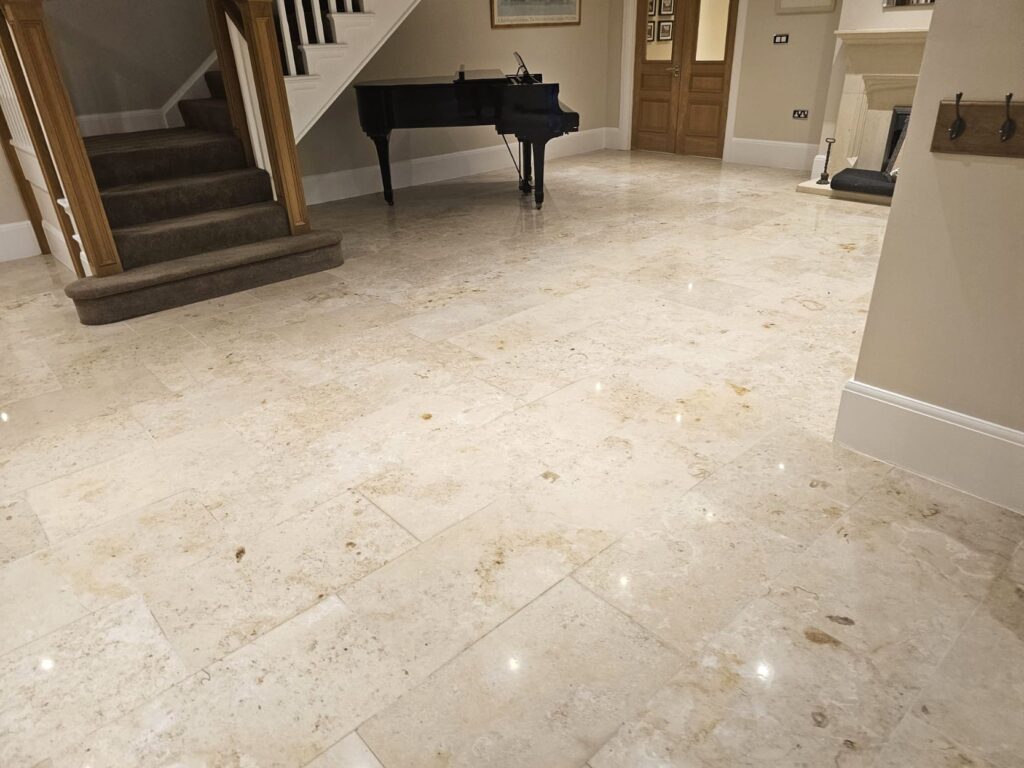
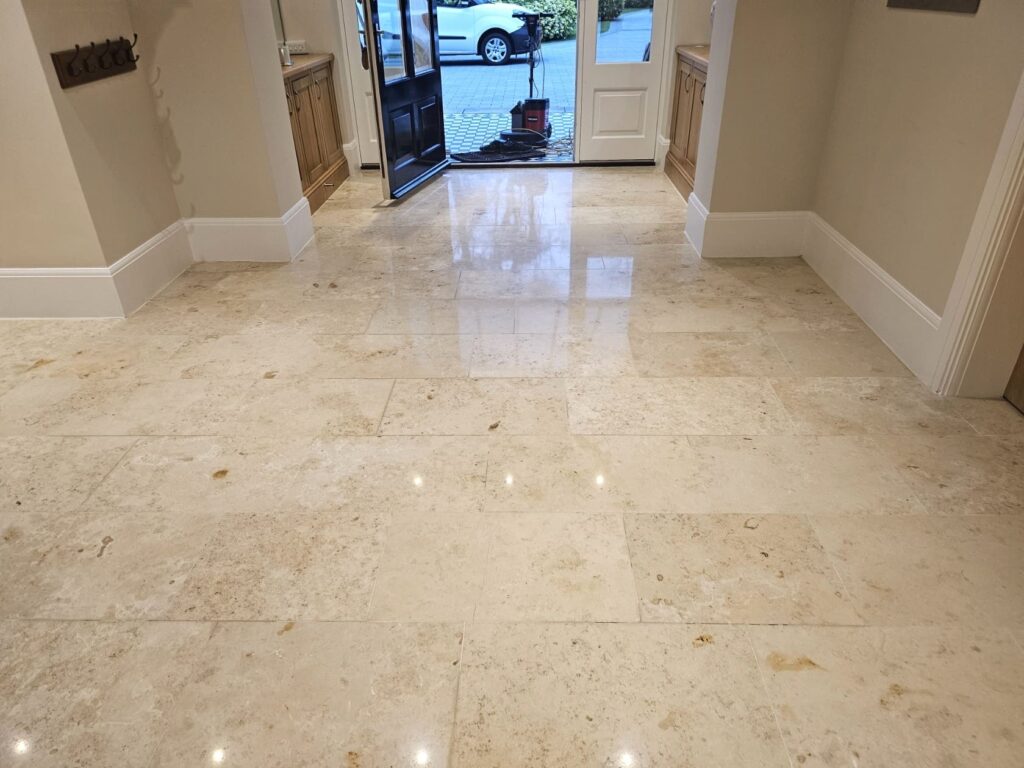
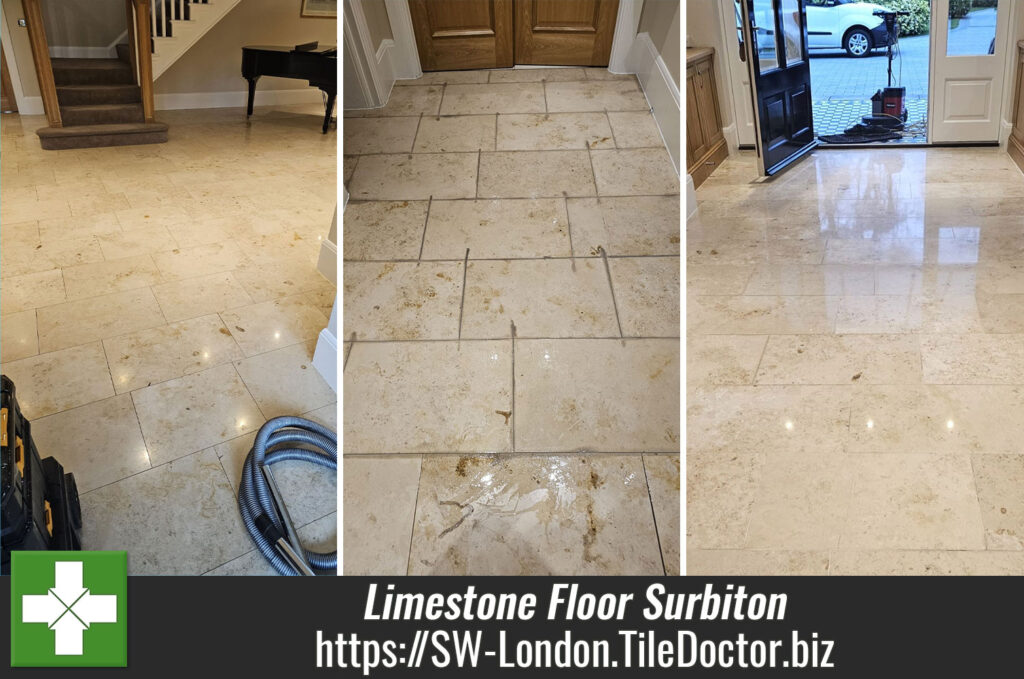
Large Limestone Floor Cleaned, Polished and Sealed in Surbiton

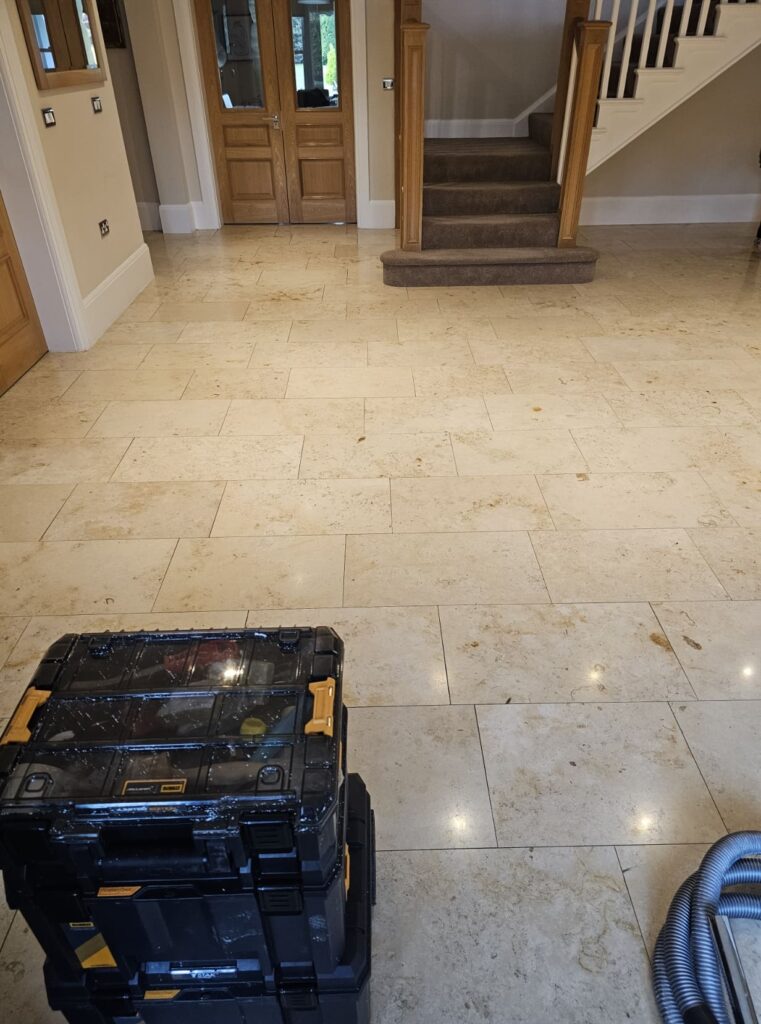
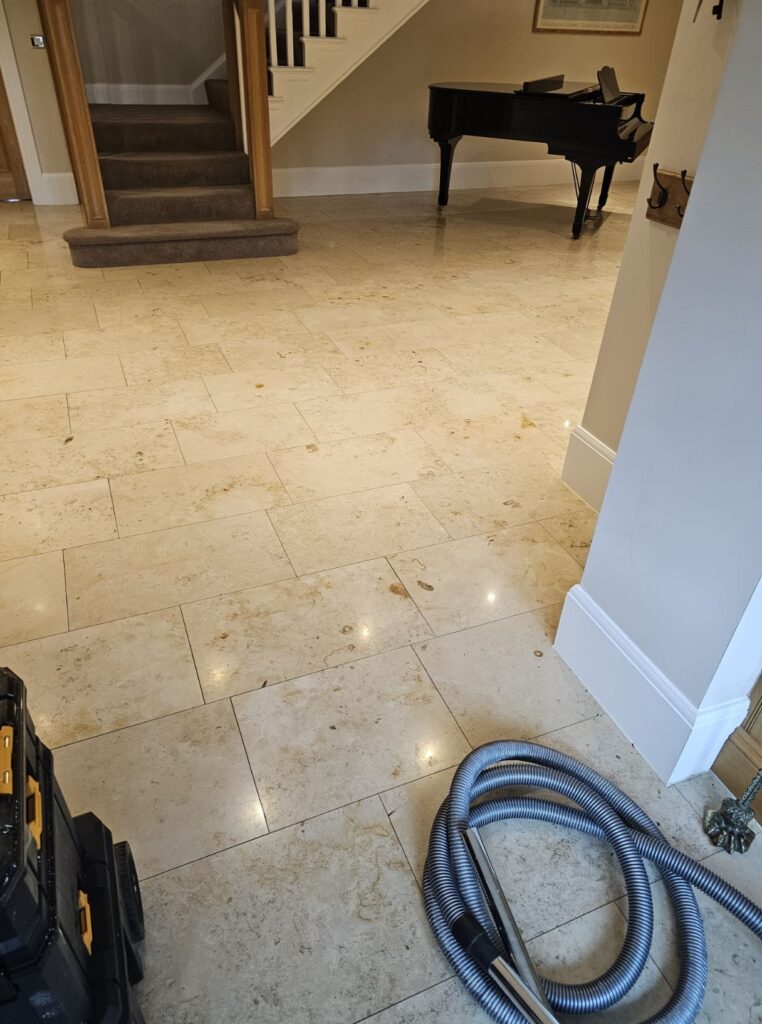
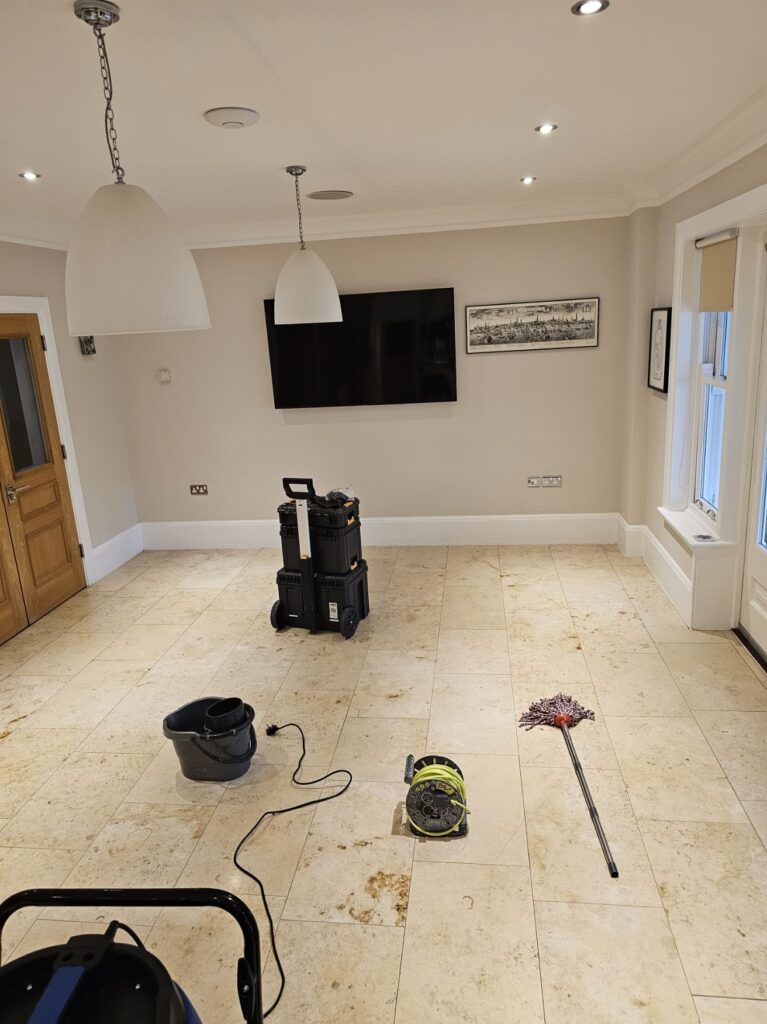
This large Limestone tiled floor at a property in Surbiton had been recently maintained by a cleaning company who didn’t do a thorough job. They hadn’t done anything to improve the polish on the Limestone and unfortunately stripped off the original sealer during cleaning leaving it vulnerable to ingrained dirt.

Limestone Floor Before Cleaning Surbiton Limestone Floor Before Cleaning Surbiton

The stone floor now looked very flat and lifeless and I was asked to do the job properly, including deep cleaning the grout, polishing the stone and finally replacing the sealer.

Stripping and Polishing Tumbled Limestone Tiles

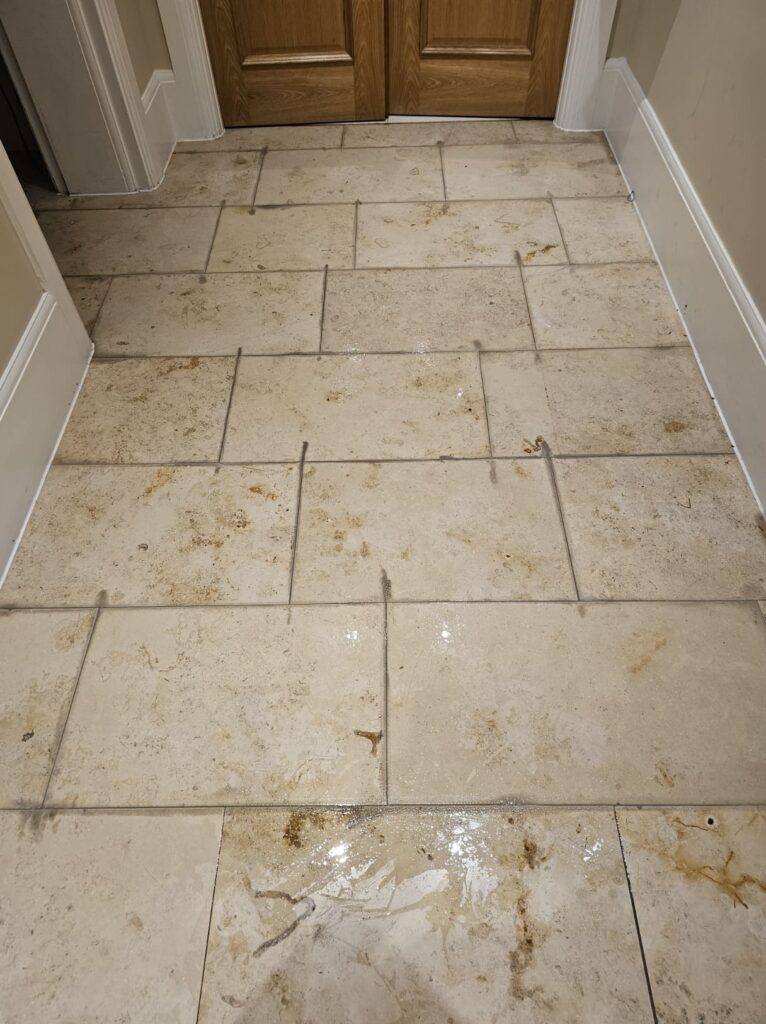
I started work by focusing on the grout which had become darkened with dirt. For this I applied a strong dilution of Tile Doctor Pro-Clean along the grout lines, left it to soak in for a few minutes and then worked it in with a wire brush. This process turned the grout from Black back to White and the dirt was rinsed off with water and extracted with a wet vacuum.

Limestone Floor During Cleaning Surbiton Limestone Floor During Grout Cleaning Surbiton

The next step was to burnish the stone using a set of Diamond encrusted pads of increasing grits that range from a coarse 400-grit to a very fine 3000-grit. The pads are fitted to the rotary machine and are run across the whole floor lubricating with water which darkens as the dirt is lifted out of the stone. Each pad is moved slowly across the floor with the machine leaving small rings on each pass. The floor is then rinsed and all the slurry with a wet vacuum after each pad.

It was a large floor that extended from the hallway into the Kitchen so it took some time to cover every section thoroughly. I stopped one the 1500-grit pad had been applied and after another rinse and extraction left the floor to dry off overnight.

Sealing Limestone Tiles

I returned the next morning and set about sealing the floor with Tile Doctor Ultra-Seal which is an impregnating natural look sealer that soaks into the pores of the Limestone protecting it from within. The sealer will ensure any dirt remains on the surface where it can be easily cleaned away.

I left the sealer to dry for an hour before polishing the floor with the last in the set of burnishing pads which is a 3000-grit pad. I covered every angle of light to make sure I’d left no smudges anywhere. This pad is applied with only a little water sprayed on to the stone as its run over the surface, this technique is known as a spray burnish and leaves the floor dry.

Limestone Floor After Polishing Surbiton

Before leaving I took time to discuss aftercare cleaning which for polished stone floors, I recommend Tile Doctor Stone Soap which not only cleans but also help maintain the patina on polished stone.

Limestone Floor After Polishing Surbiton


Professional Renovation of a Large Polished Limestone Floor in South London

Large Limestone Floor Cleaned, Polished and Sealed in Surbiton Read More »

=================================

South West London Tile Doctor

================================= Read More »

Scroll to Top